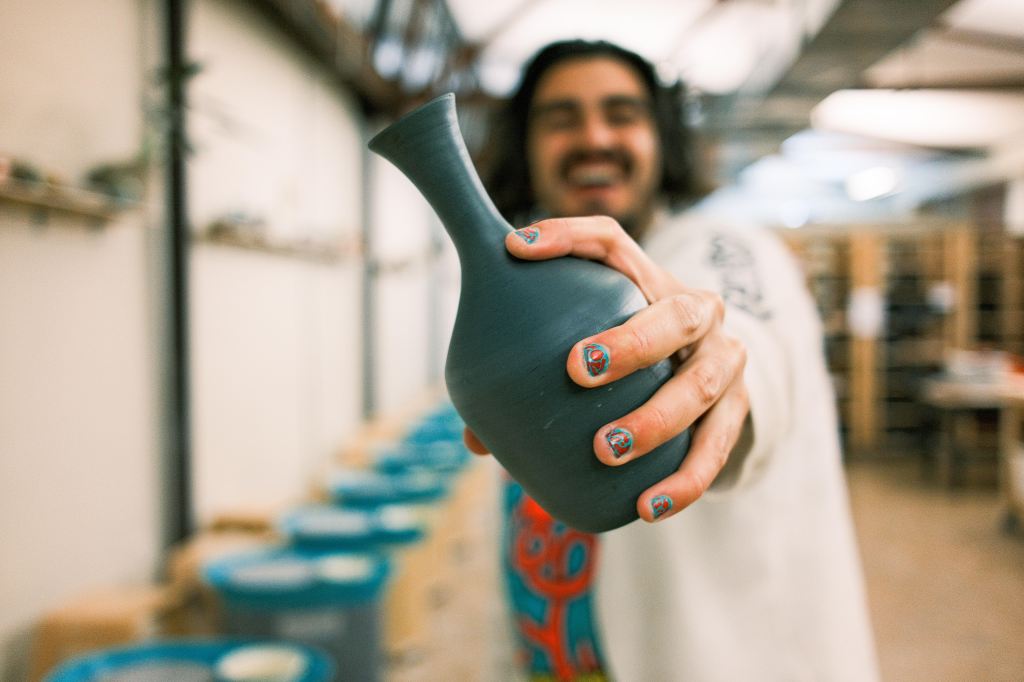
I began making pottery back in 2018 and although it’s a seemingly simple art form, the more I learn the less I feel like I know. It has taught me so many unexpected lessons.
I came into ceramics wanting to rush the creation of beautiful things, muscle my way into new forms and throw big straight away without learning how to throw small first. Many lessons of ego and patience, but the thing I think about most is that every object I made, I had an incredibly tight emotional grip on. Each object was a child of mine, and every time anything would happen to any of them I would find myself emotional and in some cases grieving.
The issue with this tight grip, particularly in pottery, is that at every stage of the process, literally every moment, there is the unavoidable potential for something to go wrong that could ruin the piece. Clay isn’t wedged properly, it unsticks from the wheel, not enough water, too much water, walls collapse, tools catch, trimming gets caught, cracks drying, glaze is too thick, glaze is too thin, glaze runs, glaze doesn’t make the color you want, firing temperatures are off, sticks to the shelf and after all that if you’re lucky enough to hold a beautiful finished piece, drop it and its gone.
Over the past year I’ve been teaching a heap of classes and it’s been incredible to watch the clay teach my students. In the process of trying to help support them I found myself repeating a phrase that I think applies to so many things.
“You need to have a passionate loose grip”
Seemingly contradictory. I want my students to hold intense passion for each of their creations, despite the possibility that it won’t go their way. If the piece fails we learn and we move on.
I think this is where I want to try and sit with my opinions.
I will passionately present my views, as if they are gods truth, sitting comfortably in the fact that at any point something could throw it off the wheel. I believe it’s so important that we have passionate conversations about big topics and that we indulge the clash of our varied opinions on them. This way big ideas meet the stress testing required for optimal outcomes, but when presented with new information or stronger arguments we must have the wherewithal to take those ideas on and shift our views. Something is smashed, we learn and we move on.
I’m starting to put my opinions out into the world, and I want this to be my guiding principle. I’m forever growing, and I hope to look back on my thoughts with the same forgiveness that I now look back on my early ceramic pieces. I created them with the absence of what I know now, and now I create with the absence of what I will know tomorrow.
I hope that we can all learn to hold a passionate loose grip.
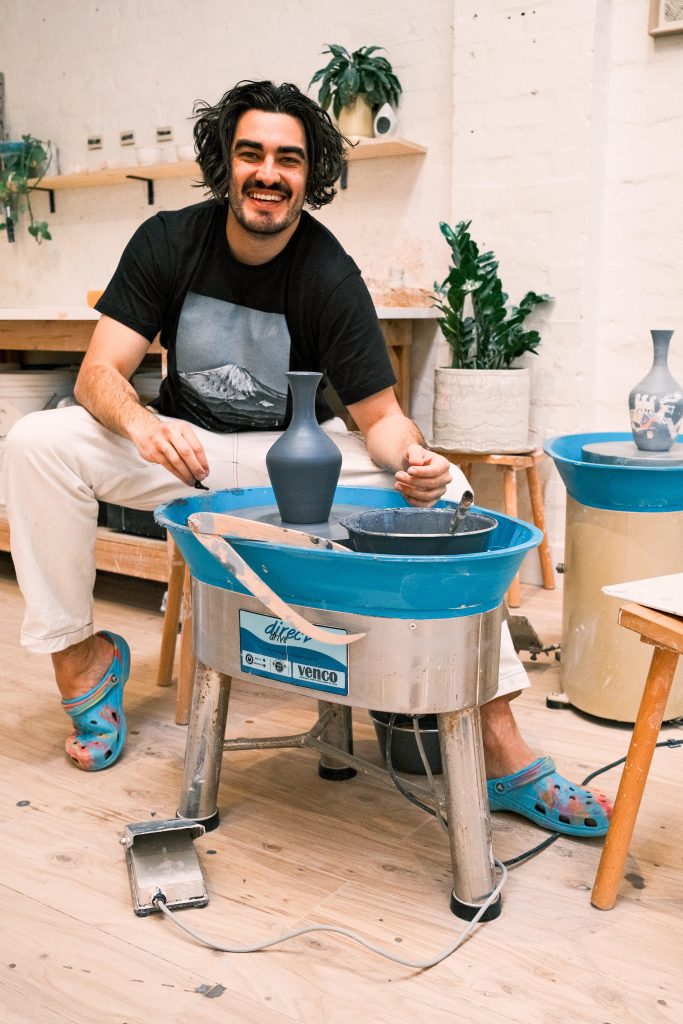
 Cameron Tayor